



Durability
Wood finish durability explained
Why some wood care products are more resistant than others, and what the test data actually shows.

By Jan Torfs, Global R&D Director at Rubio Monocoat. 20+ years in wood protection technology, molecular bonding and compliance.
ON THIS PAGE
The short answer
The most durable wood finish you can easily apply on-site is a two component hard wax oil, such as Rubio Monocoat Oil Plus 2C.
While factory-applied aluminium oxide finishes technically score higher on scratch resistance, they typically cannot be applied on-site and are difficult to refinish. For a finish you can apply or renew yourself, hard wax oil gives you the best of both worlds: the highest wear resistance of any penetrating oil, plus invisible spot-repairs. Your floor can look great for a lifetime without the need for regular sanding.
Long-lasting wood protection by Rubio Monocoat
The principle
What makes a wood finish truly long-lasting?
Most people assume a thicker coating means a more durable floor. In reality, surface-film finishes such as lacquer or polyurethane build a plastic-like layer on top. It protects the wood until it fails, and when it does, the damage is visible across the entire floor.
Durability factor
What it measures
Why it matters
Rubio Monocoat wood oil
Bond strength
How firmly the finish adheres to wood fibre
Determines whether the finish lifts, peels or stays integrated
Bonds into the fibre at molecular level, with no surface film that can peel or lift. Class 0 cross-cut adhesion (DIN EN ISO 2409), the best possible result.
Scratch resistance
Ability to resist surface marring under load
Measured by pencil hardness test (9B to 9H scale)
Because colour and protection sit in the fibre, light marring does not expose a worn film.
Abrasion resistance
Cycles before visible wear
(Wet scrub test)
Industry benchmark: over 1,000 cycles is professional grade
Professional-grade wear resistance.
Water & stain resistance
Resistance to penetration from household spills
Contact-angle test: higher angle means better water repellence
Water-resistant, and certified food-contact safe for worktops and tabletops.
Repairability
Whether local damage can be fixed without a full refinish
Lifetime cost driver: spot repairs vs full sand-and-recoat
Local damage can be spot-repaired in the original colour, with no full sanding and recoating needed.
Bond strength
What it measures
How firmly the finish adheres to wood fibre
Why it matters
Determines whether the finish lifts, peels or stays integrated
Rubio Monocoat wood oil
Bonds into the fibre at molecular level, with no surface film that can peel or lift. Class 0 cross-cut adhesion (DIN EN ISO 2409), the best possible result.
Scratch resistance
What it measures
Ability to resist surface marring under load
Why it matters
Measured by pencil hardness test (9B to 9H scale)
Rubio Monocoat wood oil
Because colour and protection sit in the fibre, light marring does not expose a worn film.
Abrasion resistance
What it measures
Cycles before visible wear (Wet scrub test)
Why it matters
Industry benchmark: over 1,000 cycles is professional grade
Rubio Monocoat wood oil
Professional-grade wear resistance.
Water & stain resistance
What it measures
Resistance to penetration from household spills
Why it matters
Contact-angle test: higher angle means better water repellence
Rubio Monocoat wood oil
Water-resistant, and certified food-contact safe for worktops and tabletops.
Repairability
What it measures
Whether local damage can be fixed without a full refinish
Why it matters
Lifetime cost driver: spot repairs vs full sand-and-recoat
Rubio Monocoat wood oil
Local damage can be spot-repaired in the original colour, with no full sanding and recoating needed.

How they work
Wood finishing types: how they work
Three families of finish, three very different ways of protecting wood, and three very different outcomes when they wear.
Lacquer & polyurethane
Because lacquer and polyurethane sit on top of the wood, they do not age gracefully. A deep scratch typically breaks the film and turns white. Local repairs almost never match the aged look of the surrounding floor, so full refinishing, sanding back to bare wood, is often the only option for an even result.
Traditional penetrating oils
Linseed or tung oil soaks deep into the wood to nourish the fibres, giving the most natural look possible. But there is a trade-off: durability. These oils offer very little wear resistance and need fresh maintenance coats every 12 to 18 months.
Hard wax oil
Hard wax oils soak into the wood while the natural waxes settle right at the surface. This gives a beautiful, natural look and feel, with better water and wear resistance, a great choice for kitchens, living rooms and busy family spaces.
Two-component (2K) hard wax oil takes this further: mixing the oil and wax (component A) with a hardener catalyst (component B) makes the finished surface significantly harder, without losing its natural character or easy repairability.
Match the finish to the job
What is the most hard-wearing finish for your wood?
The right finish depends on where the wood lives: indoors or out, horizontal or vertical.
The evidence
How is wood oil durability tested?
To ensure wood oils withstand real-world wear, they undergo rigorous standardised testing. These are measurable scientific benchmarks, not marketing claims.
Wet scrub test
The wet scrub test uses a weighted pad loaded with cleaning solution that is moved back and forth across a wooden surface until the finish wears through. Unlike a dry abrasion wheel, it replicates what a floor really endures: mopping and repeated friction in the same spots.
Pencil hardness test
This measures "mar resistance", the hardest pencil grade that fails to scratch the surface. Grades run from 9B (softest) to 9H (hardest). Oil Plus 2C reaches F once fully cured (5 to 7 days), consistent with premium hard wax oil performance. (EN ISO 15184)
UV test
Exterior wood care products are tested in a QUV weatherometer, which simulates years of UV and moisture cycling in weeks, measuring colour fastness, degradation and checking. DuroGrit passes extended QUV cycles, resisting greying, cracking and colour loss on horizontal exterior surfaces. (ISO 11507 / ASTM G154)
Wood care product
Wet scrub test
Pencil hardness test
Leading result
Finish type
Rubio Monocoat Oil Plus 2C
Wet scrub test
Over 1,000 cycles
= professional grade
Pencil hardness test
F
= premium performance
Independent proof
Certifications & independent proof
All Rubio Monocoat durability and safety claims are backed by independent third-party certification, issued by accredited bodies after physical and chemical testing.
GreenGuard Gold
UL Environment
Lowest VOC class. Required for LEED v4 projects.
View certificate
Eurofins Indoor Air Comfort Gold
Eurofins
European indoor air quality standard.
View certificate
EN 71-3 Toy Safety
European Standard
Safe for contact with children's toys.
View certificate

EC 1935/2004 Food Contact
EU Regulation
Approved for surfaces in contact with food.
View certificate

ISO 9001
Quality Management
Certified production processes.
View certificate
A+ Label
Indoor Air Quality
Highest French air quality classification.
View certificate
EPD
Environmental Product Declaration
Independently verified life-cycle data.
View certificate
0% VOC
Certified, not self-declared
Verified by external laboratory analysis.
View certificate
Get it right
How to apply wood oil for optimal durability
Correct application is as important as product choice. Follow these steps for Oil Plus 2C, and always check the technical data sheet for your exact wood.
1
Sand to bare wood.
80 grit, finishing at 100 to 120 grit for interior floors.
2
Dust removal.
Vacuum thoroughly and use a tack cloth. Any impurities reduce bond strength.
3
Mix components.
Part A (oil) and Part B (accelerator) at a 100:25 ratio by volume. Stir for 3 minutes.
4
Apply thinly.
Use a white pad or short-pile roller, spreading in the direction of the grain.
Temperature note
Work between 15–25°C. Below 10°C curing may be slow or incomplete, which substantially reduces durability. Also do not apply in direct sunlight or on hot surfaces.
5
Remove excess.
After 3 to 5 minutes, remove all excess with a clean white pad.
Safety
Oil-soaked cloths and pads can heat up on their own and catch fire. Soak every cloth and applicator in water before you throw it away.
6
Cure time.
Light foot traffic after 12 hours. Full cure at 5 to 7 days. Avoid cleaning for 5 days.
Watch: how to apply Oil Plus 2C - step-by-step video
Side by side
Head-to-head: hard wax oil vs lacquer vs polyurethane
The same floor, three finishes, and what actually separates them in use.
Factor
Hard wax oil (Oil Plus 2C)
Water-based lacquer / polyurethane
Oil-based polyurethane
Bond type
Cures inside the wood fibre
Film, sits on top of the wood
Film, sits on top of the wood
Coats required
A single coat
3 to 4
2 to 3
Appearance
Natural, matte, grain-forward
Clear to slight sheen, less tactile
Warm amber, moderate sheen
Scratch behaviour
Blends in over time, no film break
Scratches turn white, film breaks
Scratches show, film breaks
Yes, sand lightly, re-oil, invisible
Difficult, new finish rarely matches
Difficult, new finish rarely matches
Full refinish needed
No, maintained indefinitely
Every 7 to 10 years
Every 10 to 15 years
VOC content
0% (certified)
Low to moderate
High (solvent-based)
Light traffic ready
12 hours
24 hours
24 to 48 hours
Full cure
5 to 7 days
7 to 14 days
14 to 21 days
Food-contact safe
Yes (EC 1935/2004 certified)
Check manufacturer
Not typically certified
Toy-safe
Yes (EN 71-3 certified)
Check manufacturer
Not typically certified
GreenGuard Gold
Yes
Check manufacturer
No
The long view
What a long-lasting wood finish looks like over a decade
Durability is not just day one. It is how a floor behaves, and what it costs you, across ten years and beyond.
Hard wax oil (Oil Plus 2C)
Lacquer / polyurethane
Year 1 to 2
Hard wax oil (Oil Plus 2C)
Clean with pH-neutral soap. No further action needed.
Lacquer / polyurethane
Clean with manufacturer-approved cleaner. Avoid abrasives.
Year 3 to 5
Hard wax oil (Oil Plus 2C)
Apply a maintenance oil coat in one afternoon. No sanding. Refresh high-traffic areas.
Lacquer / polyurethane
Surface may show dulling or micro-scratching. Touch-up rarely matches.
Year 5 to 7
Hard wax oil (Oil Plus 2C)
Spot-repair any localised damage in hours. No floor closure required.
Lacquer / polyurethane
Film starts to show wear patterns.
Year 10+
Hard wax oil (Oil Plus 2C)
If well maintained, simply add another maintenance coat. If needed, sand and re-oil locally.
Lacquer / polyurethane
Full sand back to bare wood required. Floor closed for several days.
Proof in the field
Hard-wearing wood finish in practice: high-traffic projects
High-quality wood oils not only perform in residential homes, they also excel in environments that push durability to its limits.
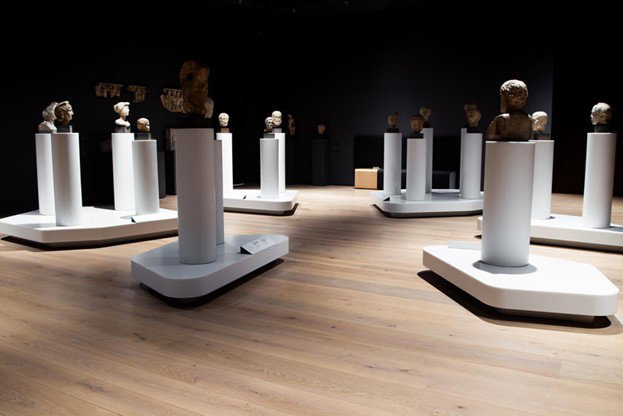
National Museum Oslo, Norway
Surface
13,000 m² oak parquet, larger than the Rijksmuseum or the Guggenheim Bilbao
Product
Oil Plus 2C, colour Natural + Pure
Opened
2022 (new building)
Challenge
Hundreds of thousands of visitors a year, and the finish must not distract from the art
Result
Natural-look oil finish that ages gracefully without requiring floor closure for maintenance
View project
Museum
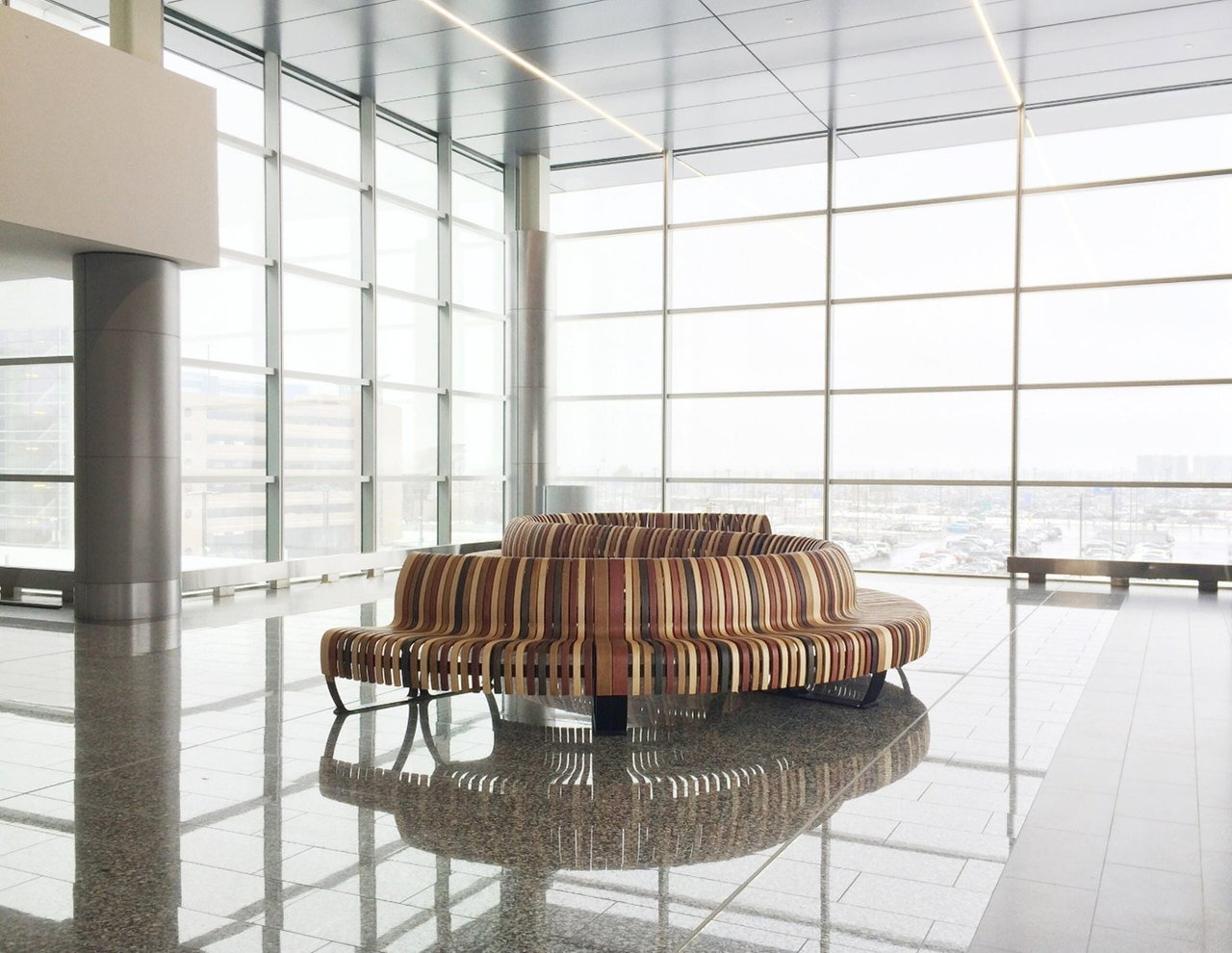
Calgary International Airport, Canada
Surface
Oak and maple seating, international terminal
Product
Oil Plus 2C
Opened
October 2016 (international terminal)
Throughput
Over 18 million passengers a year
Result
Staff perform spot repairs on benches in situ, with no closure
View project
Airport
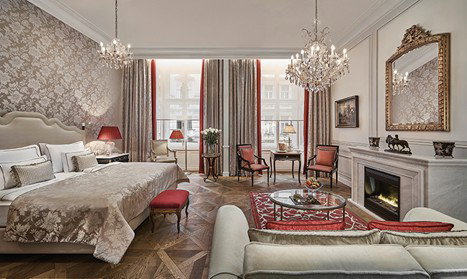
Hotel Sacher, Vienna, Austria
Surface
250 m² oak parquet across 7 suites
Product
Oil Plus 2C, custom shades matched to the existing patina
Renovation
Completed 2017
Challenge
Match a historic patina, with heat and water resistance for bathrooms and zero disruption
Result
Invisible spot repairs by staff, no noisy sanding, suites never taken out of service
Hotel
Questions
Frequently asked questions
Oil Plus 2C can last the lifetime of the floor. The only requirement is annual cleaning with a suitable soap, and maybe a refresh coat every 3 to 5 years. No sanding, no professional involvement required. Unlike lacquer, the floor never needs a full strip unless it has been physically damaged.
No. Over a ten-year period in real use, hard wax oil is harder to wear out than polyurethane. In laboratory abrasion testing the scores are comparable (over 1,000 cycles for Oil Plus 2C versus 800 to 1,200 for oil-based polyurethane). But polyurethane cannot be spot-repaired: every scratch is visible and permanent until the whole floor is sanded back. A finish you can maintain indefinitely outperforms one that needs full replacement every 10 to 15 years.
In high-traffic areas, surface marks occur with any finish. The critical difference is what happens next: on a lacquered floor, a scratch breaks the film and turns white. On a hard wax floor, the finish is inside the wood rather than on top, so scratches compress the fibres rather than cracking a film. They blend in over time, especially on textured or brushed wood, and can be repaired locally without touching the surrounding floor.
Yes. Oil Plus 2C has proven its worth in heavy-duty commercial environments including airports, train stations and museums. The combination of molecular bonding, spot-repairability and maintenance-without-sanding makes it more practical for commercial environments than film-forming finishes.
Yes. Oil Plus 2C is a genuine single-coat system due to its molecular bonding mechanism. No second coat is needed or beneficial. Any excess must be removed during application.
Of all common floor finishes, hard wax oil is the best choice for homes with pets. Not because it is harder, but because claw marks can be repaired invisibly without sanding the whole floor. With Oil Plus 2C, a claw scratch compresses the fibres rather than cracking a film. Apply a small amount of oil to the area, work it in, and the mark disappears.
For a kitchen worktop, Oil Plus 2C is the strongest long-term choice. It is certified food-safe (EC 1935/2004), heat-resistant and water-resistant once fully cured, and it can be spot-repaired invisibly if a knife mark or burn occurs. A lacquered worktop offers a marginally harder surface initially, but any damage requires refinishing a large area to match the surrounding sheen.
About the author
Jan Torfs
Global R&D Director at Rubio Monocoat
Jan Torfs is Global R&D Director at Rubio Monocoat. With over 20 years at the forefront of wood protection technology, Jan leads the science behind the company's single-layer oil system, 0% VOC standards, and third-party certification.
↑ Back to top